
The Policies section in Secure Privacy is your central control panel for creating, managing, and publishing the privacy and cookie policies that govern your website. This guide explains how to navigate the Policies dashboard, generate a legally compliant privacy policy using the guided wizard, edit policy content, assign policies to domains, and manage multilingual translations.
If you have already created your policy and are ready to display it on your website, see the dedicated guide to embedding policies.
Who Is This For?
Website administrators setting up and managing privacy and cookie policies in Secure Privacy
Compliance officers generating GDPR-compliant policy documents and keeping them current
Developers assigning policies to specific domains and configuring multilingual policy content
Navigating the Policies Section
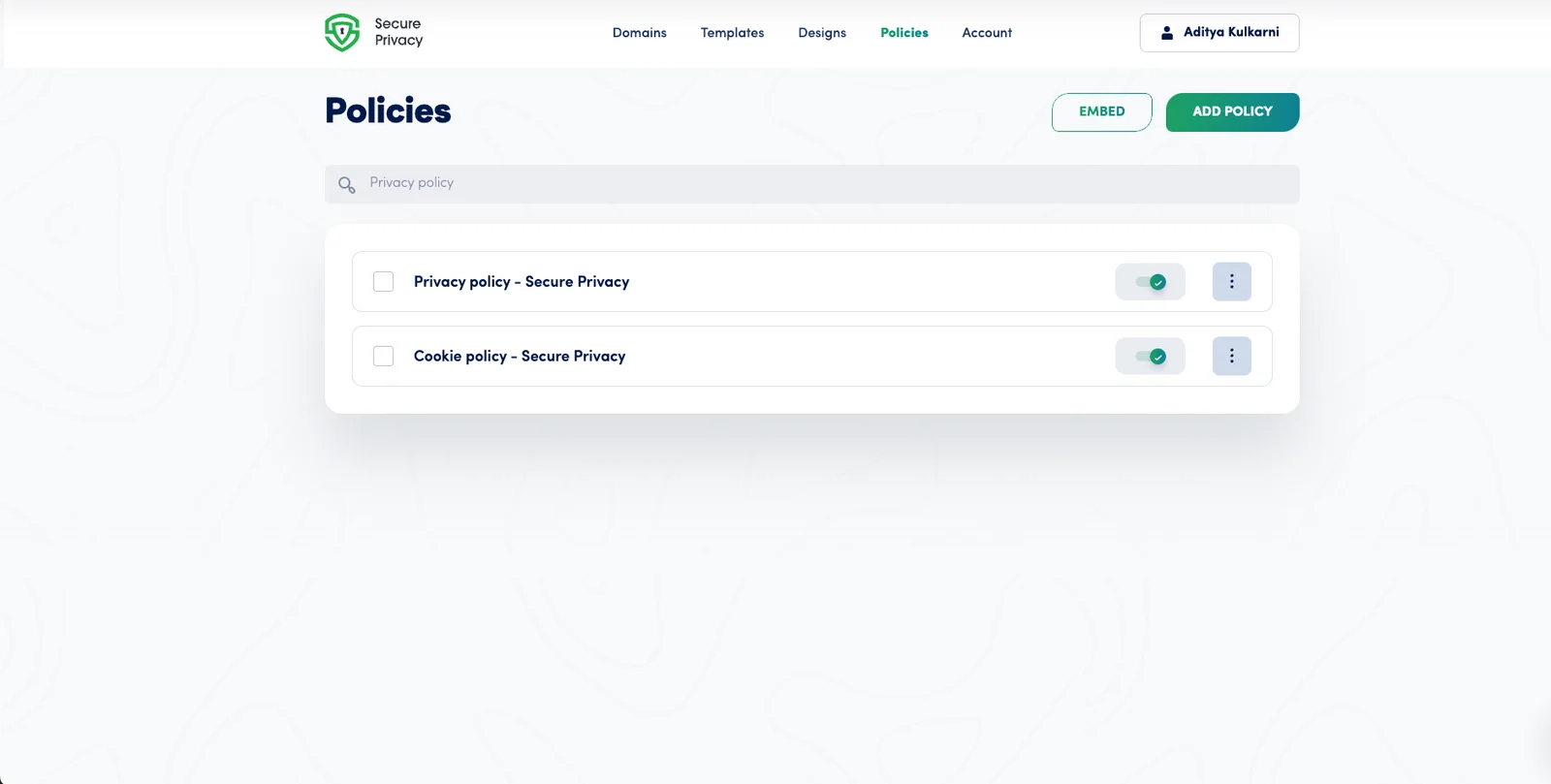
Log in to your Secure Privacy account and open the Policies section from the dashboard. Two default policies are pre-created for you on account setup: a Privacy Policy and a Cookie Policy — both pre-populated with your business name to maintain transparency and compliance from day one.
How to Find and Edit Your Policy Settings
The Policies section allows you to:
Enable or disable policies: Use the toggle switches to activate or deactivate each policy for your website.
Edit policy details: Click the policy name or the menu icon next to it and select Edit to modify settings — including the title, domain assignment, and policy source.
In Edit mode, you can:
Edit the policy title
Assign the policy to specific domains in your account
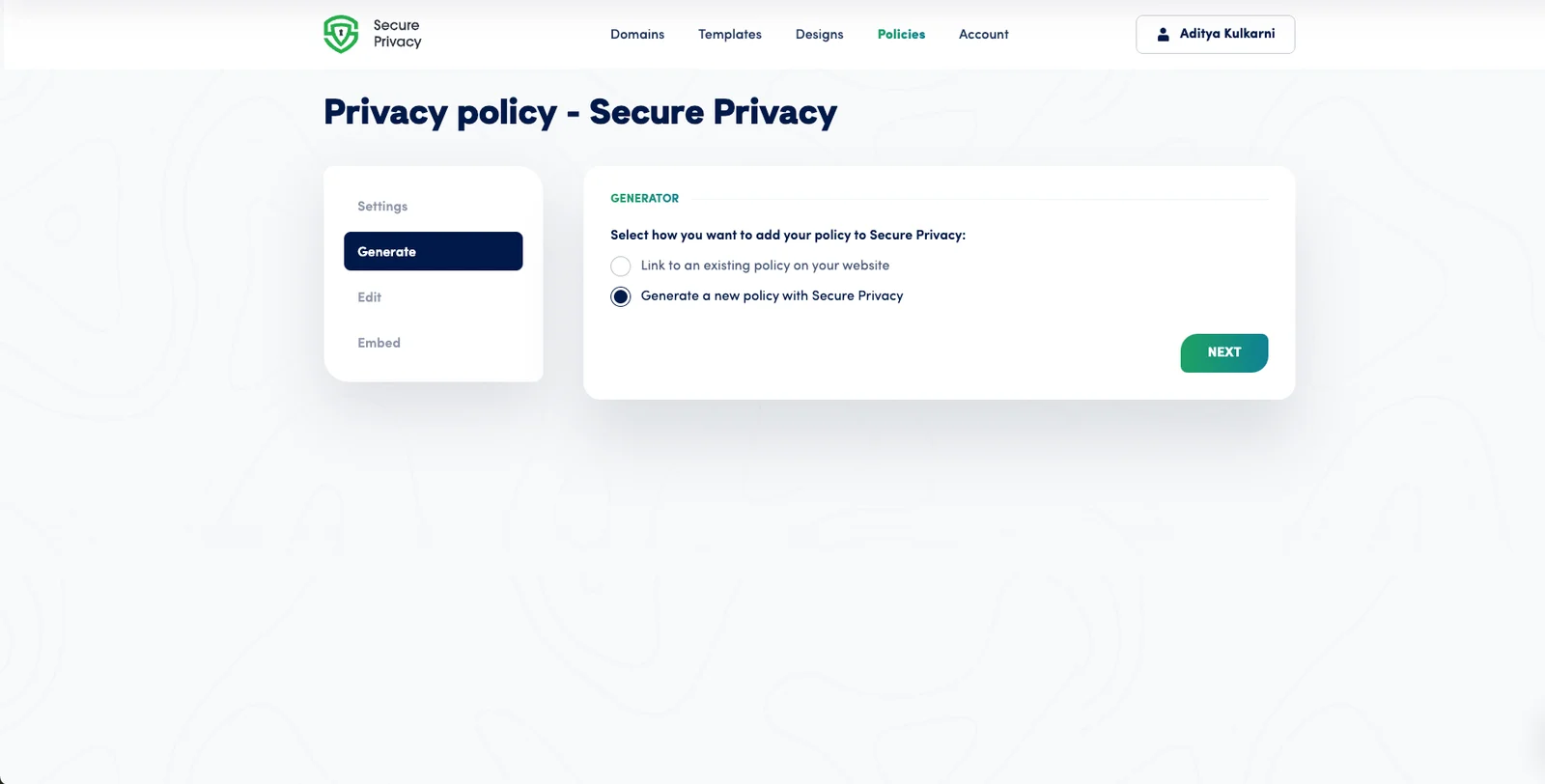
Generate a new policy using the wizard or link to an existing policy URL hosted elsewhere
How to Generate a New Privacy Policy
Secure Privacy's policy generator walks you through a guided four-step wizard to create a legally compliant privacy policy. You will be asked to provide:
The privacy laws and regulations the policy should adhere to (e.g., GDPR, CCPA, LGPD)
Your entity type — business or individual
Data Protection Officer (DPO) details, if applicable
Contact information for users exercising their data rights
Third-party service provider details — including payment processors, analytics tools, and advertising services
Security measures and data collection practices
How to Edit Your Generated Policy
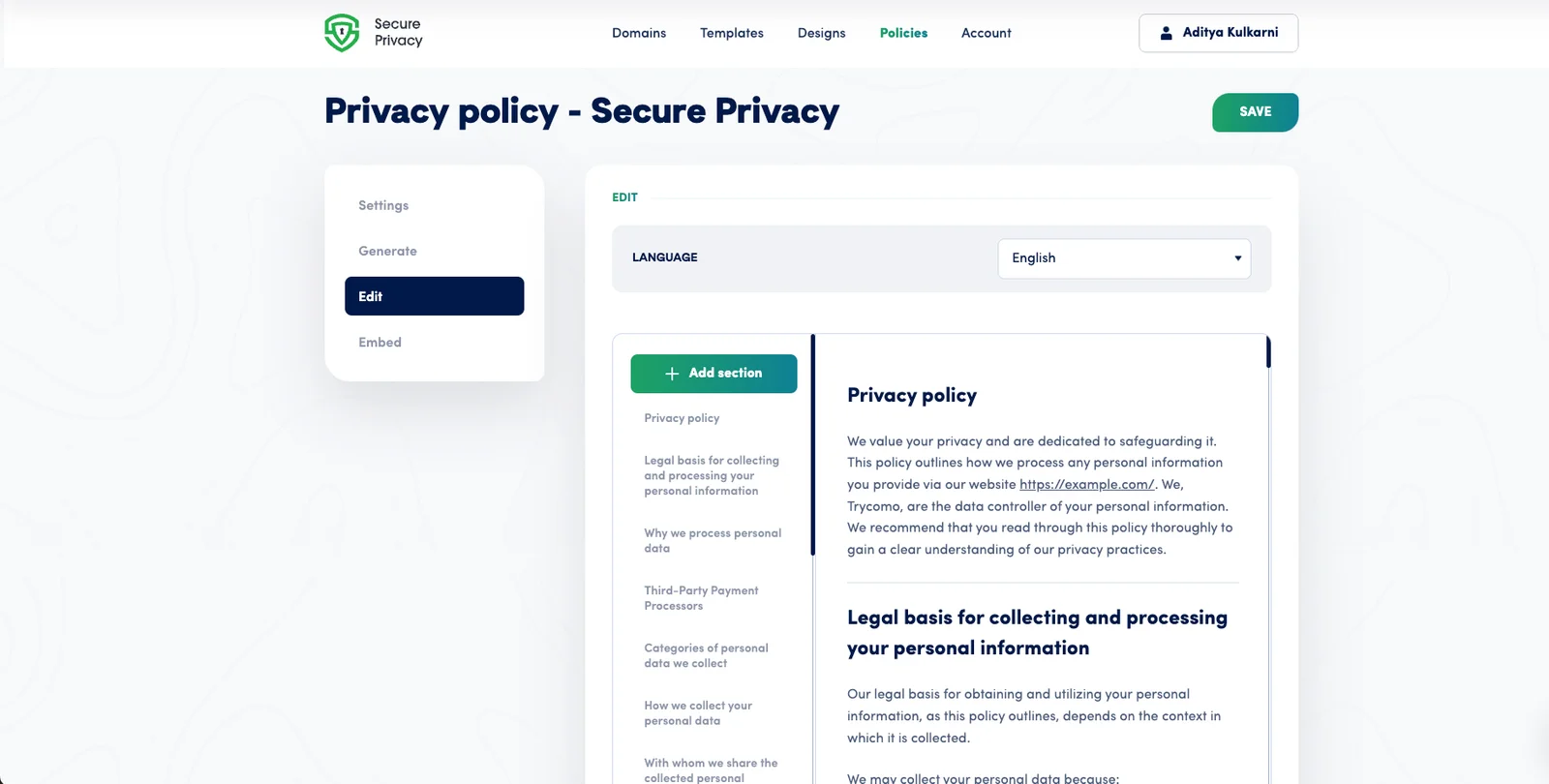
After generating your policy, use the block-based editor to fine-tune the content — formatting sections, updating text, and inserting tables where needed.
Important: Replace all placeholder text — including items in square brackets such as [sp-...] — with your actual business details, including your website URL, DPO name, and contact email. Incomplete placeholders will result in an inaccurate or non-compliant published policy.
Managing Multilingual Policies
If your website serves visitors in multiple languages, Secure Privacy allows you to translate your policies by selecting the target language from the dropdown in the top-right corner of the editor. The policy text adjusts automatically to the selected language. Make sure to save your changes after editing each language version.
Frequently Asked Questions
Placeholders are still visible in my published policy — what should I do?
Review your policy in the editor and search for any remaining text in square brackets — such as [your website URL] or [DPO email] — and replace each with your actual business information. Save the policy after making replacements and check the live version to confirm all placeholders have been resolved.
My policy is not displaying on my website — how do I fix this?
First, confirm that the policy is enabled using the toggle switch in the Policies dashboard. Then verify it is correctly embedded or linked on your website using the embed code from the Policies section. If you are using a linked URL, check that the URL is accessible and returns the correct policy content. See the policy embedding guide for detailed instructions.
The translated policy text is not updating after I select a new language — what should I check?
Clear your browser cache and hard refresh the policy editing page. Ensure you have saved your changes after switching languages — unsaved edits will revert when you navigate away. If the correct translation is still not appearing, try selecting the language again from the dropdown and saving once more.