
The Global Privacy Platform (GPP) is a standardized framework developed by the IAB to unify user consent signals across multiple privacy regulations and jurisdictions into a single, interoperable consent string. This guide explains what GPP is, which frameworks it supports, and how to enable it in Secure Privacy to simplify consent management across the EU, US states, and beyond.
Who Is This For?
Compliance officers managing consent requirements across multiple jurisdictions simultaneously
Developers implementing standardized privacy protocols for advertising and vendor consent
Marketing teams operating in global markets who need consolidated consent signal management
What Is the Global Privacy Platform (GPP)?
GPP is a protocol that consolidates consent signals from different regional privacy frameworks into a single standardized output known as the GPP String. Supported frameworks include:
IAB Europe's Transparency and Consent Framework (TCF v2.2)
IAB Canada TCF
MSPA US National privacy string
US state privacy laws — California (CCPA/CPRA), Virginia (VCDPA), Utah (UCPA), Colorado (CPA), and Connecticut (CTDPA)
How the GPP String Works
The GPP framework reads and merges consent signals from each enabled regional framework into a single GPP String. That string contains two components:
Header: Describes which jurisdictional frameworks are included in the string
Sections: Holds the jurisdiction-specific privacy and consent details for each included framework
This structure allows publishers, advertisers, and vendors to read a single consent signal rather than parsing multiple framework-specific strings separately.
Benefits of Implementing GPP
Simplifies global privacy compliance by consolidating multiple consent frameworks into one signal
Improves communication efficiency between websites, advertisers, and ad tech vendors
Built to adapt to evolving privacy regulations — new frameworks can be added without rebuilding your consent infrastructure
Reduces compliance costs for organizations operating across multiple jurisdictions
GPP and Privacy Law Coverage
GPP supports compliance with both EU and US privacy regulations:
EU GDPR: Supported via IAB's TCF v2.2 framework
US state privacy laws: California (CCPA/CPRA), Virginia (VCDPA), Utah (UCPA), Colorado (CPA), and Connecticut (CTDPA)
Secure Privacy supports the following US privacy strings within the GPP framework:
usca— Californiausva— Virginiausco— Coloradousut— Utahusct— Connecticut
How to Enable GPP in Secure Privacy
Log in to your Secure Privacy account.
Navigate to your domain's settings.
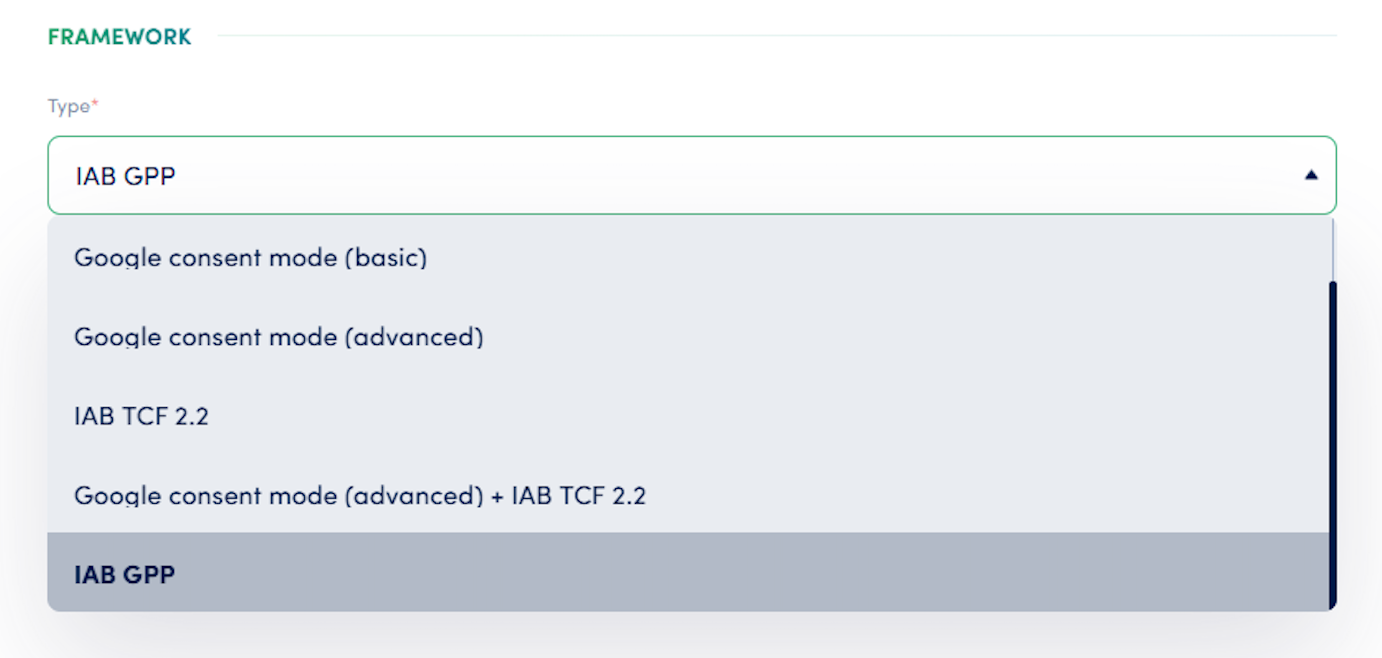
Locate the Framework dropdown and select IAB GPP.
Select the TCF Vendors you want to support — these are the ad tech vendors whose consent signals will be included in your GPP String.
Choose the relevant notices and opt-out categories to comply with US Privacy Strings and provide visitors with appropriate control over their data.
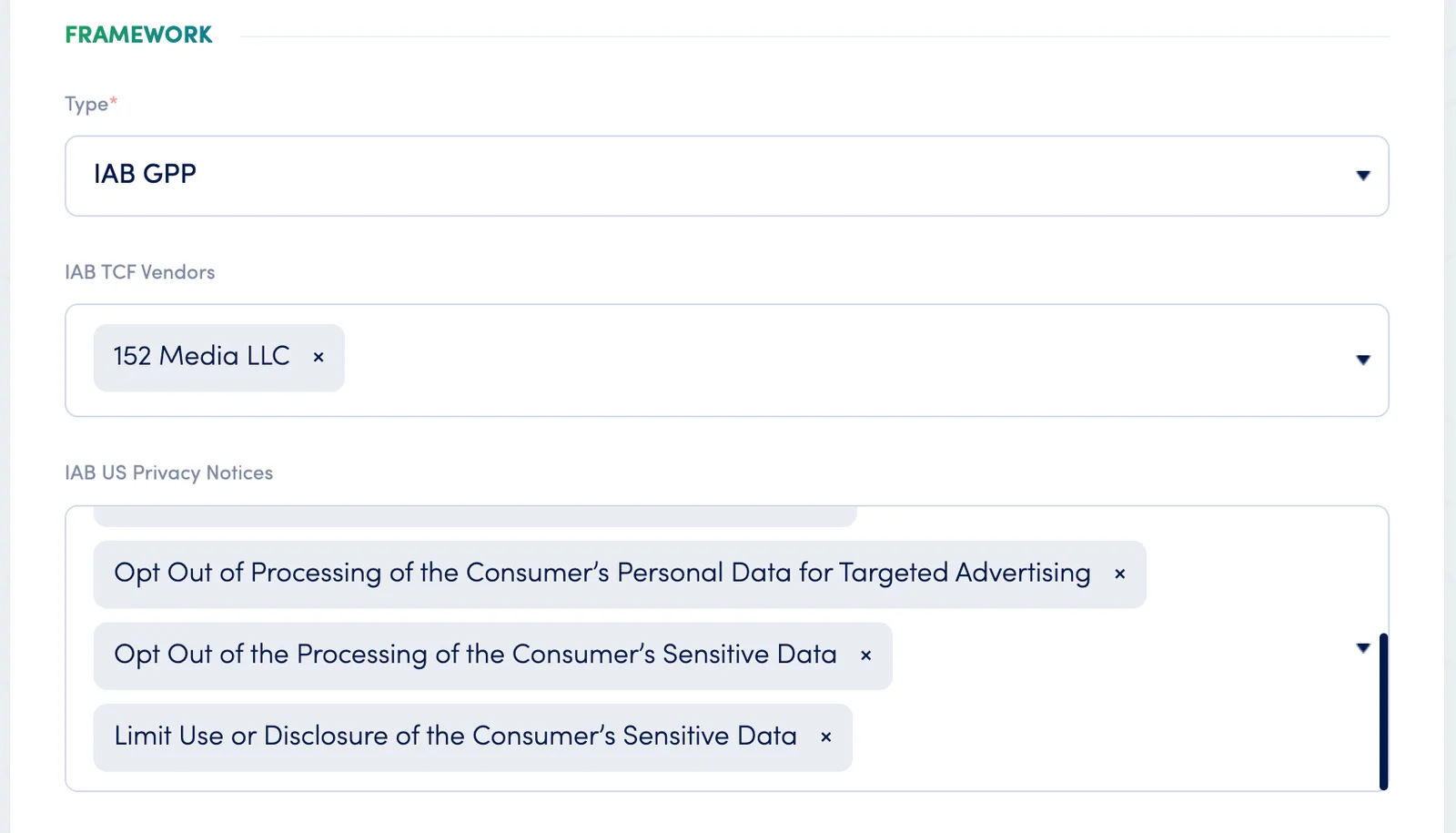
Note: US Privacy notices are not provided by Secure Privacy. You are responsible for creating and maintaining the required notices on your own domains in accordance with applicable state privacy laws.
Frequently Asked Questions
Which TCF vendors should I include in my GPP configuration?
The vendors you include should reflect the third-party advertising and analytics services active on your website. Review the IAB TCF vendor list and cross-reference it with the services detected in your Secure Privacy Scan Report. Only include vendors whose consent is relevant to your website's data processing activities — including unnecessary vendors increases complexity without compliance benefit.
Why are my US Privacy notices not applying correctly?
Confirm that the correct notice and opt-out categories have been selected in your Secure Privacy GPP settings. Also verify that the US Privacy strings relevant to your audience — such as usca for California visitors — are enabled. Remember that the content of US Privacy notices must be created and hosted by you, not Secure Privacy — check that your notice URLs are correctly configured and accessible.
Does enabling GPP replace my existing GDPR TCF configuration?
No. Enabling GPP adds an additional consent signaling layer — consolidating TCF v2.2 and US state framework signals into a single GPP String. Your existing TCF configuration is carried through the GPP framework under the TCF section of the string. Review your vendor selections after enabling GPP to ensure they still reflect your intended configuration.